Showing posts with label Biography. Show all posts

Friday, October 31, 2008

A Match Made in Heaven

Maria Taylor, wife to missionary James Hudson Taylor, knew what was of utmost importance in marriage. When Hudson Taylor considered leaving China to gain an education and a sense of worldly honour in order that he might be a more suitable suitor for Maria, she responded,
I would wait if he went home in order to increase his usefulness. But is he to leave his work in order to gain a name for the sake of marrying me? If he loves me more than Jesus he is not worthy of me - if he were to leave the Lord's work for the world's honour, I would have nothing further to do with him.
To which Hudson replied,
She is a noble girl.
Taken from Hudson Taylor & Maria: A Match Made in Heaven

Wednesday, September 03, 2008

Inspirational Biographies

I enjoy reading Christian biographies, yet recently I've been impacted more by the lives & ministries of some of the Christian 'greats' in some of the talks given by John Piper. Here are a couple that I've listened to already -
Here a few more on my 'to listen to' list:

Thursday, February 07, 2008

Stirred as a Pot of Paint

I'm enjoying reading Dr Helen Roseveare's book Living Faith: Willing to be Stirred as a Pot of Paint. I have just come to that part in her story that provides the explanation for the book's title. During reconstruction work in Zaire in 1969 following the devsatation caused by the civil unrest in 1964-5, Dr Roseveare was involved in the development of a medical training school. She writes:
Moving around inspecting all the different areas of work, I went in search of the painters (student volunteers) to see how they were faring. They were not in the first classroom, which suprised me. When I did not find them in the second room, I became suspicious. I looked at the woodwork around the door, which had not noticeably changed since I last saw it. I touched it gingerly. There was a sort of brown, sticky "goo"... I moved quickly across to the library. There they were, chatting away, brushes in and out of the paint pot, up and down the woodwork, totally unconcious that they were making no impression. The window frames looked just as before. I strode across to them and looked into the paint pot.

There was a sold mass of white matter, under a very thin remaining layer of rapidly dissapearing linseed oil. The pot had not been stirred....

I demonstrated the art of stirring. Hard work, right down to the bottom of the can, till all that was solid was stirred into the diluting oil, to become one consistency. It changed colour. It would not go so far now, but it would achieve the purpose for which it was designed. I left the two students, duly mollified, I thought, painting away with renewed vigour. Some half hour later, I suddenly realised that I had failed to explain that the paint would need stirring every so often until the job was completed...

We needed to be stirred until there was no seperation left between solid and liquid, between secular and spiritual, weekdays and Sundays. Our lives needed to be one of consistency, through and through, ready to do the task for which we were created. This stirring would need to be continued daily until the task was completed.
I wonder if we could pray as she did:
Please go on working in me until I really am transformed into the image of your Son. Today I mean this, with every ounce of my being, but when You start doing it, and the stirring hurts, and I feel I can't take it anymore, maybe I'll cry out to You to stop. Please when that happens, don't listen to my cry to stop, but just remember my vow to you today to be available to You, and just go on working away at me to make me like You want you to be.

Wednesday, January 02, 2008

Stirred as a Pot of Paint

One of the Christmas presents I received from my husband this year was Dr Helen Roseveare's Living Faith: Willing to be Stirred as a Pot of Paint. This is one in a series of reprints of her classics for a newer audience. I'm hoping to start reading it soon and offer a review on it, but today I thought I'd give you a heads up on this remarkable woman and leave you with a couple of other resources about her life and ministry.

For those of you who might be unfamiliar with Dr Roseveare, she was an English Christian missionary to the Congo from 1953-1973 where she practised medicine and trained others in medicine. She was taken in 1964 by rebel forces during a time of dangerous political instability where she endured beatings and rape. After her release she returned to England before heading back in 1966 to serve until 1973.

Helen Roseveare was one of the speakers at last years Desiring God "Stand" Conference. She spoke on "A Call for the Perseverance of the Saints" and you can listen or watch online here.

For a taster, here is a Noel Piper giving a short biographical overview of her life.


Also available online:
The Cost of Declaring His Glory audio
Digging Ditches interview with Evangelicals Now.
Maintaining Spirituality
Faithful in Loss - Final chapter in Noel Piper's book, Faithful Women & their Extraordinary God.

Wednesday, October 31, 2007

Happy Reformation Day!

As many of you will know, today is Reformation Day & over at Tim Challies' blog he once again has his reformation symposium up and running. Unfortunately, here at titus2talk we've been a bit behind in coming up with our entry, and to be honest, we're not likely to do any better than making one of the top four spots from last year!

Therefore, for any of you who missed out on reading our entry from last year, I've decided to do the lame thing and repost it - Catriona's post on the wife of Martin Luther is well worth the read - we'll try to do better next year! Happy Reformation Day!

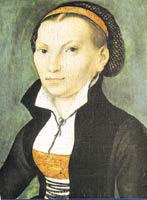
Katie Luther: A Proverbs 21 Woman
Today is Reformation day when the church traditionally commemorates Martin Luther nailing his 95 theses to the door of Wittenberg's castle church on October 31st, 1517. This event prompted the Protestant Reformation, through which great swathes of Christendom were turned back to the gospel of grace alone through faith alone in Christ alone.

Martin Luther married Katharina von Bora in June 1525 and although far less is known of her life in comparison to her husband, she has much to teach us today about how to live as a Christian woman. Katharina or "Katie" as Luther called her, was born in 1499 to a family of poor Saxon nobles. Her mother died when she was just a girl and she was sent by her father to live in a convent at the age of 5. She spent her childhood here and at the age of 16, she took her vows and became a nun.

Even in the convent, Katie heard of Luther and his teachings and she and several others determined to leave their life as nuns. Luther himself heard of their desire to escape and he arranged for a merchant friend of his to transport them out of the convent in his wagon, apparently in empty fish barrels! Luther arranged marriages or employment for all the escapees except Katie, and finally married her himself in 1525.

"She gets up while it is still dark; she provides food for her family." Proverbs 31:15

After their marriage, Katie and Martin moved into a former monastery in Wittenberg and Katie began to bring domestic order to Martin's life. Her skillful management of the various animal holdings, vegetable garden, orchard and brewery allowed her to provide for the family and she rose at 4 am each morning to attend to her duties, earning her the nickname "the morning star of Wittenberg". She and Martin had six children of their own and they also raised four orphan children. She provided hospitality for the numerous students who stayed with them and for the many visitors looking to consult with her husband.

"She opens her arms to the poor and extends her hands to the needy." Proverbs 31:20

During times of sickness in the region, she allowed a hospital to be set up in their property and tended the patients herself.

She was no stranger to sorrow as two of her daughters died, one aged 8 months and another at 13 years of age. She outlived Luther by six years and after his death, was forced to flee Wittenberg with her family due to the outbreak of war. After returning to Wittenberg in 1547, she was force to leave again in 1552 due to an outbreak of the Plague, and during her journey to Torgau she was involved in an accident which left her badly injured. She died in December 1552, her last words being quoted as "I will stick to Christ as a burr to cloth".

There is no doubt that Katie's devotion to her duties as a wife freed Luther to pursue his teaching and writing, and apparently the Luthers' family life became a model of a godly home for other German families in the succeeding years.

This October 31st, when so many others are celebrating Halloween, let's thank God for the legacy of the Reformation and for the example that Katie Luther is to Christian women nearly 500 years later.

"Charm is deceptive and beauty is fleeting; but a woman who fears the LORD is to be praised." Proverbs 31:30

Monday, April 23, 2007

Christian Biographies Part 1

Thanks to all of you who took the time to email in with your favourite Christian biographies. Today I want to highlight one that Beth and Alicia have recommended, A Chance to Die: The Life & Legacy of Amy Carmichael by Elisabeth Elliot. On missionary biographies in general, Beth wrote:
"I am encouraged and inspired by these women who trusted God and went to hard places. Their confidence in Him and their willingness to forsake comfort for those to whom they were called makes me long for those qualities in my own life. I admire the steel backbones of these women and the compassionate hearts they had for the lost."
Amy Carmichael was a Christian missionary to India who served there for 55 years without furlough. The title of Elliot's biography was no doubt inspired by Amy's response to a question she received in a letter from a young lady: "What is missionary life like?" Her reply: "Missionary life is simply a chance to die."

So, if you are looking for something to read at the minute, perhaps you might want to read and be inspired by the life and legacy of Amy Carmichael. Also, take time to visit Beth's blog where she posted about this topic back in October of last year!

Monday, January 15, 2007

Your Weekly Dose of Susannah Spurgeon

Last week, we introduced a new series called "Your weekly dose of Susannah Spurgeon." We were introduced to a woman who has been described as a wife who exercised tremendous "unselfishness and self-effacement", a "true 'helpmeet", and one who sank "her own individuality and claims" and became "absorbed in those of her husband." Today I want us to go deeper into her life, considering the outset of such a remarkable life and ministry.

As a frequent attender of New Park Street Chapel with her parents, Susannah Thompson grew up familiar with the preaching of the gospel of which she recalls the ministry of Pastor James Smith: 'A quaint and rugged preacher, but one well versed in the blessed art of bringing souls to Christ...Often I had seen him administer the ordinance of baptism to the candidates, wondering with a tearful longing whether I should ever be able thus to confess my faith in the Lord Jesus.'

That longing became a reality when, by means of a sermon from Romans 10:8, 'The Word is near you, in your mouth and in you heart' Susannah "was first aroused to a sense of her own personal need of a saviour." She writes: 'From that service..I date the dawning of the true light in my soul...constrained by his love, that night witnessed my solemn resolution of entire surrender to himself.'

Sadly, "few attempts at encouraging young converts to engage in service for their Lord" and "the lack of communion with kindred youthful spirits...were no doubt, more or less responsible for a state of coldness and indifference which in a short time took the place of joy and gladness of soul that had followed conversion." Susannah records: 'Seasons of darkness, despondency and doubt passed over me...but I had kept all my religious experiences carefully concealed in my own breast.'

It was through this period of her Christian life that the influence of a young man would indeed change her life forever and he himself would become more dear to her than any other. Next Monday we'll look at Susannah's first contact with Charles Haddon Spurgeon.

All references are taken from Charles Ray's The Life of Susannah Spurgeon.

Monday, January 08, 2007

Your weekly Dose of Susannah Spurgeon

At the outset of each week, Phil Johnson (over at Pyromaniacs) blogs under the title: "Your Weekly Dose of Spurgeon." Of course, the Spurgeon he has in mind is C.H. Spurgeon, one of the greatest preachers of the 19th Century. However, at the risk of going head to head with Pyromaniacs (foolish, I know!) over the next month or so I'd like to offer a weekly dose from Susannah Spurgeon, the wife of the esteemed preacher.

The reason for this thought is that I'm currently reading Susannah Spurgeon's Morning Devotions: Free Grace & Dying Love, which is also helpfully combined with Charles Ray's biography: The Life of Susannah Spurgeon.

Like many of you, I've heard much of Susannah Spurgeon's husband, but comparatively little about the woman who supported such a great minister. Today, I leave you with a few words from the introduction to Charles Ray's record of Mrs Spurgeon's life. It aptly describes her life and ministry:
The position of the wife of a great man, and particularly of a great minister, is not only one of rare difficulty but calls for an exercise of unselfishness and self-effacement which is quite contrary to the natural instincts of the human nature. The lady who would be a true 'helpmeet' to the popular preacher and God-ordained pastor must to a very large extent sink her own individuality and claims and become absorbed in those of her husband.

She must be prepared to part often with the one she loves best on earth, in order that he may go to fulfil his solemn engagements untrammelled by domestic repinings; she must render every assistance in her power and yet not expect to reap the praise of men, which is rightly her due; she must initiate and carry through new plans of Christian effort and be satisfied that they shall be regarded as nothing more than a legitimate part of her husband's ministry; and she must take upon her shoulders a load of responsibility, which the ordinary wife knows nothing of and which amid such a multitude of duties might overwhelm a strong and vigorous man...

No grander an example of the possibilities which the position of a preacher's wife affords,could be offered to her sisters of the manse or to the world at large than Mrs C.H. Spurgeon.

Saturday, November 18, 2006

Girltalk Book club

In the past, one of the most helpful exercises I've found is to read Christian books along with a friend. That way, not only can we spur one another along in our reading, we can discuss how the book is impacting our lives. I'd really recommend this practice. And so: if you're looking for a reading partner, the ladies over at girltalk are set to start the next book in their book club.

The girltalk bookclub are going to be reading together a biography by Sharon James, Elizabeth Prentiss: More Love to Thee. Keep posted over the next couple of weeks at their blog to find out when they'll start reading and join in with the questions they ask, and enjoy! But, in order to do that you'll need to get your own copy of the book. The girltalkers explain how to do that if you are Stateside, but if you are in the UK go here and here to get your copy.

But just to get you warmed up: let me tell you a bit about the godly woman we'll read about. Elizabeth Prentiss was a Presbyterian pastor's wife, a writer and poet. She is best known for her popular hymn "More Love to Thee, O Christ", and her book, Stepping Heavenward (which I'm enjoying reading at the moment).

In 1845 she married George Prentiss and settled in New Bedford, MA, where George became pastor of South Trinitarian Church. After settling in with the parishioners, and having a baby, within a period of three months she lost her second and third children: one as a newborn, the other aged four. She wrote this poem in that year, 1852, on the occasion of the baby's death:

"I thought that prattling boys and girls
Would fill this empty room;
That my rich heart would gather flowers
From childhood's opening bloom.

One child and two green graves are mine,
This is God's gift to me
A bleeding, fainting, broken heart -
This is my gift to Thee."


Though she continually struggled with poor health, Elizabeth went on to have four healthy children. After her death, her husband published The Life and Letters of Elizabeth Prentiss (1882), so that the more costly experiences of her life could be used to strengthen and comfort others. Elizabeth's peculiar trials indeed enabled her to sympathise even more deeply with those who suffered, to the point where, much later in life, she declared that she "loved the house of mourning more than the house of feasting."

Sharon James' biography therefore asks: "Do you feel that you would be able to grow in love for God and others - if only your circumstances were different? Maybe you find that the sheer demands of everyday life squeeze out time for God? Read this true story to find out how one woman discovered that the most difficult circumstances are "God's school" to teach us more about his grace; the very bust times are precisely those times when we need - and can find - God's strength; the worst of tragedies can draw us closer to God."

This looks like a book we can learn much from. Again, I would recommend Sharon James and her books: so let's take this opportunity, along with girltalk, to read and learn together from this remarkable woman's story.

Friday, November 17, 2006

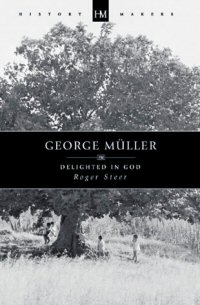
George Muller: Delighted in God

I have recently read a biography of George Muller by Roger Steer with the subtitle "Delighted in God". This is a fascinating book about a remarkable man and I highly recommend it.

George Muller was born in Prussia in 1805. He became a Christian at the age of twenty and travelled to London in 1829. He soon moved to Devon and became the minister of a Brethren chapel but he is most famous for the work he began when he moved to Bristol in 1832. At this time there was virtually no provision by the State for orphaned children from the poorest families and they were doomed to live their childhood begging on the street or consigned to the workhouse. Muller decided to open an orphanage in Bristol saying:

"I certainly did from my heart desire to be used by God to benefit the bodies of poor children , bereaved of both parents, and seek, in other respects, with the help of God, to do them good for this life...but still, the first and primary object of the work was that God might be magnified by the fact that the orphans under my care are provided with all they need, only by prayer and faith, without anyone being asked by me or my fellow-labourers, whereby it may be seen that God is faithful still and hears prayers still."

Muller opened his first home for orphans in April 1836 and over the next 63 years, the work expanded until at his death in 1898, there were five homes at Ashley Down in Bristol. Muller received nearly one and a half million pounds to fund his work, a staggering figure in this era. Throughout his life, Muller and his associates did not ask anyone for a single penny. Indeed, when times were particularly lean, he cancelled public meetings so that he would not be tempted to ask for donations. Many instances where God remarkably provided for Muller's work are retold in the book and his work still continues today, albeit in a different form.

Towards the end of his life Muller said:

"For nearly seventy years every need in connection with this work has been supplied. The orphans from the first until now, have numbered nine thousand five hundred, but they have never wanted a meal. Never! Hundreds of times we have commenced the day without a penny in hand, but our Heavenly Father has sent supplies the moment they were actually required...During all these years I have been enabled to trust in God, in the living God, and in Him alone."

As I read Muller's story, two things in particular stood out for me. First, the primary goal of Muller's work was that God be glorified. He set out to bring in all the funds required by prayer and faith alone so that the world would see that God is faithful to answer the prayer of his servant. I think that there is a lesson here for us today. As we pray for our family, friends, neighbours and needs, is our underlying desire always that God will be glorified? In fact, is God's glory the motivating desire of our heart in all that we do? As it says in the Westminster Shorter Catechism,

"Man's chief end is to glorify God and to enjoy him forever."

Secondly, this great God who was so faithful to answer the prayers of George Muller is the same great God that we come to today:

"Every good and perfect gift is from above, coming down from the Father of the heavenly lights, who does not change like shifting shadows." James 1:17

Praise God that we can bring our prayers great and small before him through his Son Jesus Christ.

"Let us then approach the throne of grace with confidence, so that we may receive mercy and find grace to help us in our time of need." Hebrews 4:12

Friday, November 03, 2006

Good Christians, Good Husbands?

"Husbands, love your wives, as Christ loved the church and gave himself up for her." (Ephesians 5:25)

For most husbands - whether admitted to or not - these words are terrifying. I know. Having been asked to 'guest blog' on the subject of a husbands' role in marriage, I've been reminded again of my many short-comings. What a standard: as Christ loved the church.

Thankfully, help is at hand. As well as biblical examples and godly present day models of sacrificial husbandship, we have two thousand years of church history to instruct us. It's on this latter front that Doreen Moore's "Good Christians, Good Husbands?" offers a valuable resource. In this page-turning book, Moore examines the colourful marriages of three renowned evangelicals: John Wesley, George Whitefield, and Jonathan Edwards. What becomes clear is that while all made a significant impact for the gospel worldwide, they were variously successful on the home-front:

John Wesley's marriage to Molly Vazeille has become notorious for its volatility. Biographers have variously described it as "one of the greatest blunders he ever made", "a preposterous union", "a martyrdom that lasted thirty years", "the fatal mistake", "a severe trial" and "a thirty years war." Another biographer summed up John's choice: "Had he searched the whole kingdom, he would hardly have found a women more unsuitable...than she whom he married."

If you needed witness to this, a shocking incident that a friend later recalled should suffice: Molly caught dragging John across the living room by the hair during an argument. The eventual result was a virtual split toward the end of their marriage. On a most sad note, John could finally record in his journals of being informed of Molly's death "a day or two after her burial."

What made for such an unhappy marriage? Moore, though not bypassing Molly, especially highlights John's shortcomings: 1) His haste in marrying; 2) His refusal to consult his brother Charles for marriage advice (as he had earlier vowed); 3) His innocent though naive expressions of affection to other women in letters- making Molly understandably jealous; and 4) His view that marriage was a seperate entity from his ministry and only valuable if it 'enhanced' that ministry.

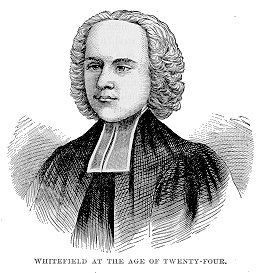
George Whitefield, I'm glad to say, enjoyed a happier marriage . This, in spite of the fact that like his contemporary John, George was an enormously busy man. Even Wesley, who preached 40,000 plus sermons himself, could speak of Whitefield's "unparalleled zeal" and "indefatigable activity."

Nevertheless, Whitefield's marriage to Elizabeth James basically stood firm. Moore attributes a number of factors: 1) Although Whitefield promised 'not to preach or travel a single mile less' because married, he did talk this through with Elizabeth before tying the knot!; 2) Whitefield and Elizabeth were assured that their marriage was 'a calling from God', however hard it became; 3) Whitefield was more careful than Wesley in his relationships with other women, protecting Elizabeth against feelings of jealously whilst on his many travels.

Ultimately, though, Whitefield's marriage can't be said to have been all it might have been. "Ministry", as Whitefield understood it, finally trumped "marriage." In Doreen Moore's summary: "When they had been together, all was pleased. They were happy in Jesus and happy in one another. Ultimately, however, it was Whitefield's ministry that would have his heart."

Jonathan Edwards' marriage is portrayed most positively of the three. In this sense, Moore's book seems to move across a spectrum: from monstrous to mediocore to marvelous! Indeed, 'marvelous' might seem an appropriate word for Jonathan's marriage to Sarah. Statistically, they were married 38 years and had 11 sons and daughters. A recent study of 1400 Edward's descendants looks at the lasting impact, revealing 100 lawyers, 66 doctors, 13 college presidents, 30 judges, 65 professors, 80 public office holders, 3 senators, 3 governors, 1 vice president, and many pastors and missionaries from their lineage!

Beyond the quantities, however, there was also a great qualtity to their marriage. After a visit and brief stay in the Edwards' home, George Whitefield remarked: "A sweeter couple I have not seen."

What were some of the reasons for Jonathan's greater success ? Moore mentions: 1) His daily devotions with his family, which he did not fail to perform ; 2) His frequent conversation with his wife over 'matters of religion'; 3) His commitment to relaxation time with family each day.

However, the chief matter that distinguished Edwards marriage from that of Wesley and Whitefield was a biblical one. For Edwards, a man's responsibilities to his wife and church were not in conflict, at distance, or in order of priority. Moore sums up Edwards' view in this key paragraph:

"He saw himself as the preacher of his family, and equally as the preacher of his church. He also saw himself as the husband or parent of his family as well as the spiritual husband or parent of his church. He was marrried to the work of the Lord and he was married to his wife. He was a minister of the gospel both in his family and in his calling to vocational ministry."

So husbands, love your wives as Christ loved the church - seeing your family as part of your ministry, not apart from it.

And wives, serve your husbands - drop this book into his Christmas stocking...

(Colin is married to Nicki and is an Assistant Pastor at Charlotte Baptist Chapel, Edinburgh.)

Monday, October 09, 2006

Marriage & Ministry

I've now come to my final post on the life and marriage of Richard and Margaret Baxter. I trust you have found their story (and these posts are only a glimpse) as a challenge, yet full of inspiring example as you follow Christ. So far, we've considered Margaret's conversion and courtship with Richard. Now a snapshot of their marriage and ministry together:

A few months prior to their marriage, Richard Baxter was removed from his position as pastor, as the established church became more rigid following the Act of Uniformity. As a Nonconformist, now without a parish, Richard married Margaret who was to be a tremendous comfort to him while he grieved as a preacher without a pulpit. Richard redirected his desire to preach into writing, where he wrote around 128 books.

Richard's continuing belief in his calling, with Margaret's support, led them to open their homes to those who continued to see Richard as 'their' pastor. This would eventually lead to Richard's imprisonment under the 1664 Conventicle Act, which banned all religious meetings which did not use the Prayer Book. Margaret chose to join him. After their release, a prohibition prevented Richard preaching within 5 miles of any place in which he lived.

In 1672 a Declaration of Indulgence meant that the penal laws against the Nonconformists were lifted. Now they could preach without fear of being arrested and Richard resumed preaching. However, this was all to revert back after one year. From then on, Richard and Margaret were continually the object of persecution and harassment for their Nonconforming beliefs. Margaret and Richard never had children, yet their lives were just as full as they engaged in ministry together. There is much to learn from this godly couple and in my opinion, from Margaret in particular. Sharon James sums up some valuable lessons in her book, In Trouble & In Joy, a book well worth investing in.

"Margaret lived in cruel times. She loved her husband dearly, and she urged him on in his ministry whatever the cost. She admired him greatly, but was ready to risk telling him his faults if she thought it was for his good. She was fiercely loyal to Richard, but always her highest loyalty was to God. She did not complain at the hardships of being the wife of a Nonconformist minister: insecurity, frequent moves, uncomfortable accommodation, the lack of privacy and the loss of status. Rather, she revelled in the opportunity her marriage gave her to minister; organizing and supporting Richard's preaching, and engaging in philanthropy and educational work. She is especially an inspiring example to ministers' wives. She is also an example to all Christians. For despite natural fearfulness she put Christ first. It did not come easily, and there was often a high price to pay. Margaret exemplified those words that are so easy to sing, but so difficult to live: Love so amazing, so divine, demands my soul, my life, my all."

Saturday, October 07, 2006

An Unlikely Marriage?

I said in my last post I would tell you about the coming together of Richard and Margaret Baxter. So here's their story:

Before marriage, Richard Baxter was a firm believer that he was better off staying single. He believed that in this way he could serve more diligently as a pastor, for there would be no time for the responsibilities of married life. As a sworn bachelor, and 24 years Margaret's senior, they could have been regarded as two of the most unlikely marriage candidates. As Margaret's pastor, Richard provided her with much spiritual counsel (mostly in the form of letters) as she struggled on the road to conversion. An increasing affection grew between them and upon the death of her mother, as Richard drew alongside, feelings developed. One source indicates that it was Margaret who took the initiative in their relationship, proposing to him. The following excerpt is from James Anderson’s book (not Catriona’s James I may add!), Memorable Women of the Puritan Times:

"The spark of love to his person was kindled in her heart. The attachment was ultimately reciprocal, but as may be inferred from allusions in several passages of his Breviate of her life, it began on her part. At first she closely concealed it from others…But the passion caused her an aching languishing of heart, and this acted so injuriously upon her feeble frame as even to endanger her life. At last she made it known to Baxter that while he was ministering to her soul, there had sprung up... an affection for his person, which she could not repress. ‘She being a pious and devout young lady, fell in love with him upon account of his holy life and fervency of preaching, and therefore sent a friend to acquaint him with her respects…His answer was, that since he had passed his youth in celibacy, it would be reputed madness in him to marry a young woman, while he could not discharge the duties of a husband in all respects. She at the door over-hearing entered the chamber and told him, “Dear Mr Baxter, I protest with a sincere and real heart, I do not make myself a tender of myself to you upon any worldly or carnal account, but to have more frequent converse with so holy and prudent a yoke-fellow, to assist me in my way to heaven, and to keep me steadfast in my perseverance, which I design for God’s glory and my own soul’s good.” Mr Baxter was at a stand, and convinced that with a good conscience he could not despise so zealous a proffer, springing from so pure a fountain of love.’

I admire Margaret today in a time when many do not seek, as a matter of priority, evidence of a holy and devout life in a prospective spouse. It certainly raises some questions: If you are unmarried, is marriage something you desire that you might more fully live for the glory of God? And if you are married, is your marriage relationship centred around glorifying God, keeping one another "steadfast in perseverence" and assisting one another on your "way to heaven"?

Stay posted for some final insights, this time from Margaret's life and ministry with Richard.

Friday, October 06, 2006

Margaret Baxter (1639 - 1681)

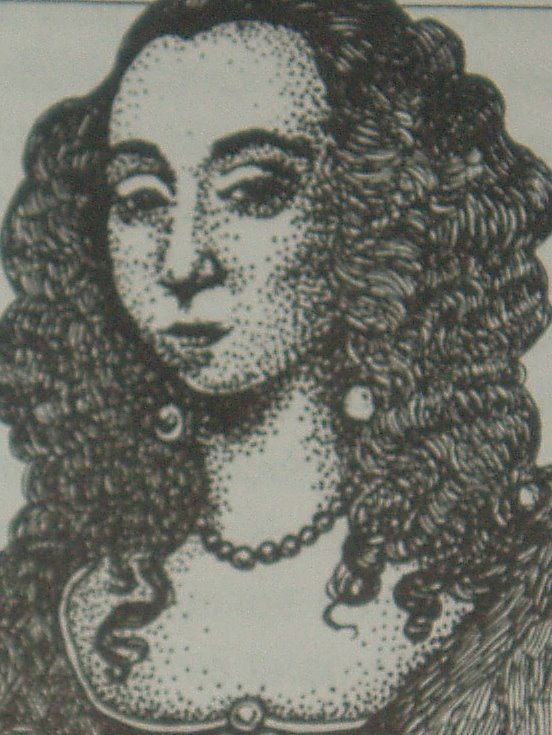
I mentioned in my last post that I would introduce you to some exemplary godly women of the past. Today I'd like you to meet Margaret Baxter, and although I have learnt much from her life, I'd like to briefly post about her conversion, as it reveals much about the need for continuing self-examination and our unworthiness before God without Christ. Margaret's mother, Mary Hanmer, was a religiously upright woman, but Margaret on the other hand was a somewhat rebellious teenager, concerned with socializing, romance, fashion and generally, 'worldly.' Now that might not seem too extreme, yet truth be told, her life was far from living as God would intend. Such frivolity disturbed Mary Hanmer, and in an attempt to instill some godly character and teaching into her daughter, she appointed a religious governess, yet this only served to be counterproductive as the strictness of this woman only drove Margaret further from God.

After a move to Kidderminster to sit under the ministry of a young preacher named Richard Baxter (Margaret's future husband), we see the stark contrast between their lives. Sharon James decribes them in her book (see previous post): "If Richard was a sworn bachelor, then Margaret was a confirmed flirt, and vain with it. She was disgusted at the poverty and dreariness of the humble inhabitants of Kidderminster. In rebellion against the move she reacted by dressing as splendidly and ostentatiously as possible. Yet outward behaviour concealed an inner turmoil." Shortly, we find the prayers of her mother answered as Margaret soon thrived under the ministry of Richard Baxter as she was confronted with her selfishness and pride. She became convicted of her sin and rebellion towards God. Her feelings of guilt were written down in her Self-Judging Papers and at the age of twenty she professed conversion. I'll leave you with some of Margaret's own words, extracts from ten marks which reveal her sinfulness before God and what conversion would mean in her life:

Mark 1: "The Spirit of Christ is the Author of the scriptures, and therefore suiteth your disposition to it, and guideth you by it. I fear then I have not the Spirit of Christ; for I yet feel no love to God's word."

Mark 2: "The Spirit of Christ is from heaven, from God our Father, and leadeth us upward unto him. Its work is spiritual, of heavenly tendency, making us cry, Abba, Father, and working the heart by uniting love to God. It is not so with me; for I have a spirit tending only to selfishness and sin."

Mark 3: "The Spirit of Christ uniteth us to Christ, and one another by love, and is against hatred, division, and abusing others. Mine, then, is the spirit of Cain, for I cannot endure any that are not of my opinion and way."

Mark 4: "The Spirit of Christ is a spirit of holiness, and doth not favour licentiousness in doctrine, or in life. Though I am for strict principles, I am loose in practice."

Mark 5: "Christ's Spirit inclineth to love, humility and meekness, and makes men stoop to each other for their good. None more uncharitable, proud and censorious than I."

Mark 6: "The Spirit of Christ makes men little, low and vile in their own eyes: it is pride that puffeth up. My self-conceitedness shows that I am unhumbled."

Mark 7: "The Spirit of Christ doth work to the mortifying of the flesh, even all its inordinate desires, and to self-denial. I am a stranger to the work of mortification and self-denial. I can deny myself nothing but the comfort of well-doing."

Mark 8: "The Spirit of Christ is a prevailing Spirit, and doth not only wish and strive, but overcome the flesh. The flesh prevaileth with me against the Spirit."

Mark 9: "Christ's Spirit is the Author of his worship and ordinances, and suits the souls of believers to them, the word, sacraments etc. They seem not suitable to my soul; I am against them, and had rather not use them, if I durst."

Mark 10: "Christ's Spirit is in all the saints, and inclineth them to holy communion with each other in love, especially to those in whom this Spirit most eminently worketh. It is not thus with me. I desire not the communion of the saints; my affections are most to those who are best to me."

"To go no further, it is now evident that I am a graceless person."

If you like a good romance, stay posted to find out how Richard and Margaret finally got married...

Thursday, October 05, 2006

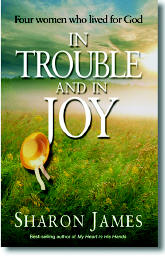
Four Women who Lived for God

Well it seems that we have reached that point in our blog where the puritans have made a feature! Not only has Catriona being delving into John Flavel, I have been doing some reading around in Puritan land this week also. However, I must confess, I have taken the easier route and I am not reading any of the great works from the Puritans themselves, but rather a biography of some of their wives and other females from around the 1600's-1800's. Sharon James' book, In Trouble & in Joy portrays four Christian women of the past, two who married Puritans, one who remained notably single, the other who is well known for her prolific writing of books and hymns; all of whom exemplified godliness in quite remarkable ways. Sharon looks at Margaret Baxter, the wife of Richard Baxter; Sarah Edwards, married to Jonathan Edwards; Anne Steele, who refused offers of marriage in order to remain single and Frances Ridley Havergal the writer of that great hymn, 'Take My Life and Let it Be.' Therefore, over my next few posts I hope to introduce these amazing women to you and share some of the ways in which their lives have displayed what it means to be consecrated to God. As they say, I'll keep you posted.