Tuesday, October 10, 2006

John Flavel again

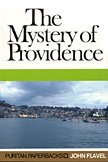
I know it must seem that titus2talk is turning into a blog about Puritans - Chris Ross over at The Conventicle is starting to worry! Please forgive me for sharing another insight from The Mystery of Providence.

In his chapter on How to Meditate on the Providences of God, Flavel states "In all your reviews and observations of Providence, be sure that you eye God as the author and orderer of them all". Later he states that we must "Eye the design and end of God in all [our] comforts. Know that it is not sent to satisfy the cravings of [our] sensual appetite, but to quicken and enable [us] for a more cheerful discharge of [our] duty."

As I read this, I was struck by how much I take my comforts for granted; so often I forget to thank God for the home I live in, the clothes I wear, the central heating that comes on at the flick of a switch when the nights are getting colder. However, even when I acknowledge God as the source of all these good things, do I assume that they are provided simply to make me feel better or make my life easier? Here Flavel reminds us that these comforts are given to us to enable us to joyfully fulfill God's purposes for us. He quotes Deuteronomy 28:47, where God rebukes the Israelites because they did not serve the Lord joyfully and gladly in the time of prosperity.

This challenged me that often I am all too ready to complain about things even though I live in relative prosperity. Do we look at our washing machine and get annoyed by the never-ending piles of washing, or see it as a gift from God that enables us to wash our clothes and have some time saved to serve God in other ways? Are we thankful for our homes and looking for ways to show others hospitality or do we closet ourselves up, only too happy to escape from other people and their problems? We must thank God for all he has given us but also think about how he may be wanting us to use those things to serve him with gladness.

Monday, October 09, 2006

Marriage & Ministry

I've now come to my final post on the life and marriage of Richard and Margaret Baxter. I trust you have found their story (and these posts are only a glimpse) as a challenge, yet full of inspiring example as you follow Christ. So far, we've considered Margaret's conversion and courtship with Richard. Now a snapshot of their marriage and ministry together:

A few months prior to their marriage, Richard Baxter was removed from his position as pastor, as the established church became more rigid following the Act of Uniformity. As a Nonconformist, now without a parish, Richard married Margaret who was to be a tremendous comfort to him while he grieved as a preacher without a pulpit. Richard redirected his desire to preach into writing, where he wrote around 128 books.

Richard's continuing belief in his calling, with Margaret's support, led them to open their homes to those who continued to see Richard as 'their' pastor. This would eventually lead to Richard's imprisonment under the 1664 Conventicle Act, which banned all religious meetings which did not use the Prayer Book. Margaret chose to join him. After their release, a prohibition prevented Richard preaching within 5 miles of any place in which he lived.

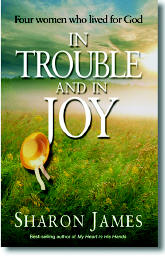
In 1672 a Declaration of Indulgence meant that the penal laws against the Nonconformists were lifted. Now they could preach without fear of being arrested and Richard resumed preaching. However, this was all to revert back after one year. From then on, Richard and Margaret were continually the object of persecution and harassment for their Nonconforming beliefs. Margaret and Richard never had children, yet their lives were just as full as they engaged in ministry together. There is much to learn from this godly couple and in my opinion, from Margaret in particular. Sharon James sums up some valuable lessons in her book, In Trouble & In Joy, a book well worth investing in.

"Margaret lived in cruel times. She loved her husband dearly, and she urged him on in his ministry whatever the cost. She admired him greatly, but was ready to risk telling him his faults if she thought it was for his good. She was fiercely loyal to Richard, but always her highest loyalty was to God. She did not complain at the hardships of being the wife of a Nonconformist minister: insecurity, frequent moves, uncomfortable accommodation, the lack of privacy and the loss of status. Rather, she revelled in the opportunity her marriage gave her to minister; organizing and supporting Richard's preaching, and engaging in philanthropy and educational work. She is especially an inspiring example to ministers' wives. She is also an example to all Christians. For despite natural fearfulness she put Christ first. It did not come easily, and there was often a high price to pay. Margaret exemplified those words that are so easy to sing, but so difficult to live: Love so amazing, so divine, demands my soul, my life, my all."

Saturday, October 07, 2006

An Unlikely Marriage?

I said in my last post I would tell you about the coming together of Richard and Margaret Baxter. So here's their story:

Before marriage, Richard Baxter was a firm believer that he was better off staying single. He believed that in this way he could serve more diligently as a pastor, for there would be no time for the responsibilities of married life. As a sworn bachelor, and 24 years Margaret's senior, they could have been regarded as two of the most unlikely marriage candidates. As Margaret's pastor, Richard provided her with much spiritual counsel (mostly in the form of letters) as she struggled on the road to conversion. An increasing affection grew between them and upon the death of her mother, as Richard drew alongside, feelings developed. One source indicates that it was Margaret who took the initiative in their relationship, proposing to him. The following excerpt is from James Anderson’s book (not Catriona’s James I may add!), Memorable Women of the Puritan Times:

"The spark of love to his person was kindled in her heart. The attachment was ultimately reciprocal, but as may be inferred from allusions in several passages of his Breviate of her life, it began on her part. At first she closely concealed it from others…But the passion caused her an aching languishing of heart, and this acted so injuriously upon her feeble frame as even to endanger her life. At last she made it known to Baxter that while he was ministering to her soul, there had sprung up... an affection for his person, which she could not repress. ‘She being a pious and devout young lady, fell in love with him upon account of his holy life and fervency of preaching, and therefore sent a friend to acquaint him with her respects…His answer was, that since he had passed his youth in celibacy, it would be reputed madness in him to marry a young woman, while he could not discharge the duties of a husband in all respects. She at the door over-hearing entered the chamber and told him, “Dear Mr Baxter, I protest with a sincere and real heart, I do not make myself a tender of myself to you upon any worldly or carnal account, but to have more frequent converse with so holy and prudent a yoke-fellow, to assist me in my way to heaven, and to keep me steadfast in my perseverance, which I design for God’s glory and my own soul’s good.” Mr Baxter was at a stand, and convinced that with a good conscience he could not despise so zealous a proffer, springing from so pure a fountain of love.’

I admire Margaret today in a time when many do not seek, as a matter of priority, evidence of a holy and devout life in a prospective spouse. It certainly raises some questions: If you are unmarried, is marriage something you desire that you might more fully live for the glory of God? And if you are married, is your marriage relationship centred around glorifying God, keeping one another "steadfast in perseverence" and assisting one another on your "way to heaven"?

Stay posted for some final insights, this time from Margaret's life and ministry with Richard.

Friday, October 06, 2006

Margaret Baxter (1639 - 1681)

I mentioned in my last post that I would introduce you to some exemplary godly women of the past. Today I'd like you to meet Margaret Baxter, and although I have learnt much from her life, I'd like to briefly post about her conversion, as it reveals much about the need for continuing self-examination and our unworthiness before God without Christ. Margaret's mother, Mary Hanmer, was a religiously upright woman, but Margaret on the other hand was a somewhat rebellious teenager, concerned with socializing, romance, fashion and generally, 'worldly.' Now that might not seem too extreme, yet truth be told, her life was far from living as God would intend. Such frivolity disturbed Mary Hanmer, and in an attempt to instill some godly character and teaching into her daughter, she appointed a religious governess, yet this only served to be counterproductive as the strictness of this woman only drove Margaret further from God.

After a move to Kidderminster to sit under the ministry of a young preacher named Richard Baxter (Margaret's future husband), we see the stark contrast between their lives. Sharon James decribes them in her book (see previous post): "If Richard was a sworn bachelor, then Margaret was a confirmed flirt, and vain with it. She was disgusted at the poverty and dreariness of the humble inhabitants of Kidderminster. In rebellion against the move she reacted by dressing as splendidly and ostentatiously as possible. Yet outward behaviour concealed an inner turmoil." Shortly, we find the prayers of her mother answered as Margaret soon thrived under the ministry of Richard Baxter as she was confronted with her selfishness and pride. She became convicted of her sin and rebellion towards God. Her feelings of guilt were written down in her Self-Judging Papers and at the age of twenty she professed conversion. I'll leave you with some of Margaret's own words, extracts from ten marks which reveal her sinfulness before God and what conversion would mean in her life:

Mark 1: "The Spirit of Christ is the Author of the scriptures, and therefore suiteth your disposition to it, and guideth you by it. I fear then I have not the Spirit of Christ; for I yet feel no love to God's word."

Mark 2: "The Spirit of Christ is from heaven, from God our Father, and leadeth us upward unto him. Its work is spiritual, of heavenly tendency, making us cry, Abba, Father, and working the heart by uniting love to God. It is not so with me; for I have a spirit tending only to selfishness and sin."

Mark 3: "The Spirit of Christ uniteth us to Christ, and one another by love, and is against hatred, division, and abusing others. Mine, then, is the spirit of Cain, for I cannot endure any that are not of my opinion and way."

Mark 4: "The Spirit of Christ is a spirit of holiness, and doth not favour licentiousness in doctrine, or in life. Though I am for strict principles, I am loose in practice."

Mark 5: "Christ's Spirit inclineth to love, humility and meekness, and makes men stoop to each other for their good. None more uncharitable, proud and censorious than I."

Mark 6: "The Spirit of Christ makes men little, low and vile in their own eyes: it is pride that puffeth up. My self-conceitedness shows that I am unhumbled."

Mark 7: "The Spirit of Christ doth work to the mortifying of the flesh, even all its inordinate desires, and to self-denial. I am a stranger to the work of mortification and self-denial. I can deny myself nothing but the comfort of well-doing."

Mark 8: "The Spirit of Christ is a prevailing Spirit, and doth not only wish and strive, but overcome the flesh. The flesh prevaileth with me against the Spirit."

Mark 9: "Christ's Spirit is the Author of his worship and ordinances, and suits the souls of believers to them, the word, sacraments etc. They seem not suitable to my soul; I am against them, and had rather not use them, if I durst."

Mark 10: "Christ's Spirit is in all the saints, and inclineth them to holy communion with each other in love, especially to those in whom this Spirit most eminently worketh. It is not thus with me. I desire not the communion of the saints; my affections are most to those who are best to me."

"To go no further, it is now evident that I am a graceless person."

If you like a good romance, stay posted to find out how Richard and Margaret finally got married...

Thursday, October 05, 2006

Four Women who Lived for God

Well it seems that we have reached that point in our blog where the puritans have made a feature! Not only has Catriona being delving into John Flavel, I have been doing some reading around in Puritan land this week also. However, I must confess, I have taken the easier route and I am not reading any of the great works from the Puritans themselves, but rather a biography of some of their wives and other females from around the 1600's-1800's. Sharon James' book, In Trouble & in Joy portrays four Christian women of the past, two who married Puritans, one who remained notably single, the other who is well known for her prolific writing of books and hymns; all of whom exemplified godliness in quite remarkable ways. Sharon looks at Margaret Baxter, the wife of Richard Baxter; Sarah Edwards, married to Jonathan Edwards; Anne Steele, who refused offers of marriage in order to remain single and Frances Ridley Havergal the writer of that great hymn, 'Take My Life and Let it Be.' Therefore, over my next few posts I hope to introduce these amazing women to you and share some of the ways in which their lives have displayed what it means to be consecrated to God. As they say, I'll keep you posted.

Wednesday, October 04, 2006

The Mystery of Providence

I'm currently reading The Mystery of Providence by John Flavel. Flavel was a pastor in Dartmouth in the 1600's and so this book is not an easy read but it is very worthwhile. It focuses on God's providence, defined by the Westminster Shorter Catechism as "His most holy, wise, and powerful preserving and governing all His creatures and all their actions." Flavel argues that as Christians it is our duty to meditate on the demonstrations of God's providence towards us, especially when we are experiencing difficulties.

So how do we do this? This book has challenged me to use my spare minutes profitably. When I'm standing over the hob cooking the dinner, or sitting on the bus, what am I meditating on? Some TV programme I saw last night, or the odd hairdo on the woman further up the bus?


Better that I use this time to think about all the amazing ways that God provides for me. So next time you have a spare minute, think about the wonders of creation, the way we can rely on the sun coming up every day, the way everything is kept going by God's sustaining hand (read Job 37-39 for more ideas). Meditate on the ways in which God has worked and continues to work in your own life:

"I will remember the deeds of the Lord; yes, I will remember your wonders of old. I will ponder all your work and meditate on your mighty deeds." Psalm 77:11&12

"When I look at your heavens, the work of your fingers, the moon and the stars which you have set in place, what is man that you are mindful of him and the son of man that you care for him?" Psalm 8:3&4

Tuesday, October 03, 2006

The Life that Pleases God

Last Sunday morning it was a challenge and a privilege for the church that I'm a member of (Charlotte Baptist Chapel) to hear God's word clearly spoken and explained. It is not that this is not a usual occurence (though I'd never take this for granted) but this particular sermon reminded me of simple truths that need to be constantly applied in my walk as a Christian. Our pastor, Peter Grainger spoke from James 1:19-27 looking at "The Life that Pleases God."

So what was it that struck me about this sermon? Many things. But four truths in particular, based on the primary importance of God's Word, came home afresh:

1. I must humbly accept God's Word.
2. I must look intently into God's Word.
3. I must not forget what God's Word says.
4. I must do what God's Word says.

Four simple principles that I can apply as I seek to live a life that pleases God. Four crucial areas which I need to address daily as a disciple, in family life, in church life and in the community in which I live. You can listen to the sermon here.

Monday, October 02, 2006

Blog Spot!

Today I'd like to recommend Solo Femininity, particularly for all you singles out there. The author of this blog is Carolyn McCulley, a single woman who has written Did I Kiss Marriage Goodbye: Trusting God with a Hope Deferred. Although I've not read the book it's on my list of books to look at, but if any of you get a copy first I'd be glad to hear what you think. Anyways, back to her blog. There is a wealth of helpful material and resources on singleness and definitely worth a look. Some of the more interesting reads are the categories on Understanding Men, Singles & the Church, Relationships and a good Q & A section. Enjoy!

Sunday, October 01, 2006

Have Today's Women's Cleaning Skills Gone Down the Drain?


Has the 'Queen of Clean', alias Anthea Turner of BBC television's 'The Perfect Housewife' programme, exposed a problem amongst today's generation of women? Each week, two slovenly contestants go to Anthea's 'perfect housewife school' to learn the basics of home management and then battle it out to be crowned 'Perfect Housewife' for the week.

Anthea herself runs a pristine, highly organised and efficient home which is an oasis of calm and beauty. In the long run, she insists, running a home in this way simply creates more time for the more enjoyable moments with family and friends. After the years of feminist rejection of housework as drudgery, it seems it is now 'cool to be a housewife'.


Many of Anthea's tips on effective cleaning are helpful, such as the use of more natural cleaning elements like lemon juice, vinegar, bicarbonate of soda, instead of today's toxic cleaning products that pollute the environment. This sits well with those of us who either have green tendencies or allergies - I have both! Her hints on organising a home can help to save time (now where was that electricity bill again?), and her hostessing ideas encourage women to plumb the depths of their creativity and find surprising skills and gifts.


However to me, the really interesting aspect of the programme lies in the people stories. It's fascinating to look at the 'gunk' in people's homes and be given an insight into the forces that have shaped them to live that way. Some contestants, when taken on a video walk round their homes, shed tears when they begin to realise just how badly, and begin to consider why they have allowed their homes to sink into the mess they're in- a poor balance between work outside and inside the home, a lone parent struggling to 'do it all', or sometimes just plain laziness.It seems the malaise of a messy home is often a symptom of an even deeper malaise.


And has the programme, I wonder, tapped into an unmet felt need amongst particularly young women and wives for some mentoring in household management skills? Once upon a time, girls were taught these things at school, and formal tuition was backed up by watching their mums at home. But since the increase in the number of girls going into higher education and having full time careers, home management skills have been cut to a minimum. Girls sometimes have the role model of an exhausted mother bringing home a 'chippie ' after a hard day at work or bunging a convenience meal into the microwave, and maybe even buying in cleaning and ironing services.


Watching the programme has made me consider how my christian faith should be worked out and apparent in the way I run my home. And Titus 2 seems as relevant and necessary today as it ever was when the Apostle Paul exhorted older women to get alongside the younger women and teach them how to live and run their homes. I'd love one of the older generation of women to teach me how to darn socks! (All applications will be considered...)


It's really great that Anthea has raised the value of running a lovely home that's a joy to live in instead of a mess to be escaped from - especially in these days when often a woman's sense of worth can unfortunately be linked to her job. But just a word of warning though... I do wonder if Anthea isn't walking a fine line between a 'healthy' degree of organisation and obsession. I just have the feeling that probably all the can labels in her cupboard are lined up facing the same way... Some viewers have declared that the programme has made them feel a failure for not managing to live up to Anthea's standards of perfection. My own response is that 100% perfection is not possible 100% of the time, so take on board whatever hints you find helpful, but know where to draw the line in the quest to run an efficient home'. I wonder where you draw the line........?